
LAND4CLIMATE
Ronava revitalisation
1. Introduction
The Roňava river basin is located in the southeastern part of Slovakia. As it is a relatively small basin, it is vulnerable to various types of weather. The basin is particularly prone to flash floods, which pose a serious problem and threat to the communities living in this area. The various types of flooding that occur lead to risks that have not been addressed for a long time. Due to its compact size and the way its forest-agricultural landscape is used for economic purposes, the river basin is not resilient to climate change. The region also faces increased heat waves, which further intensify the need for systemic changes in land management to effectively prevent gradual degradation and the growth of socio-economic problems in the long term.
Challenges facing the region
Previous activities in the Roňava river basin, focused primarily on draining large volumes of water from the basin, were carried out with the aim of creating favourable conditions for very intensive crop production through industrial agriculture. However, this approach has led to a reduction in the climate resilience of the landscape to extreme weather events. The urgent need to increase resilience to climate change requires finding and offering solutions that prioritise slowing down rainwater runoff and strengthening the natural productive potential of the area so that the landscape can cope with adverse weather conditions and periods of drought.
2. Analysis of the current situation
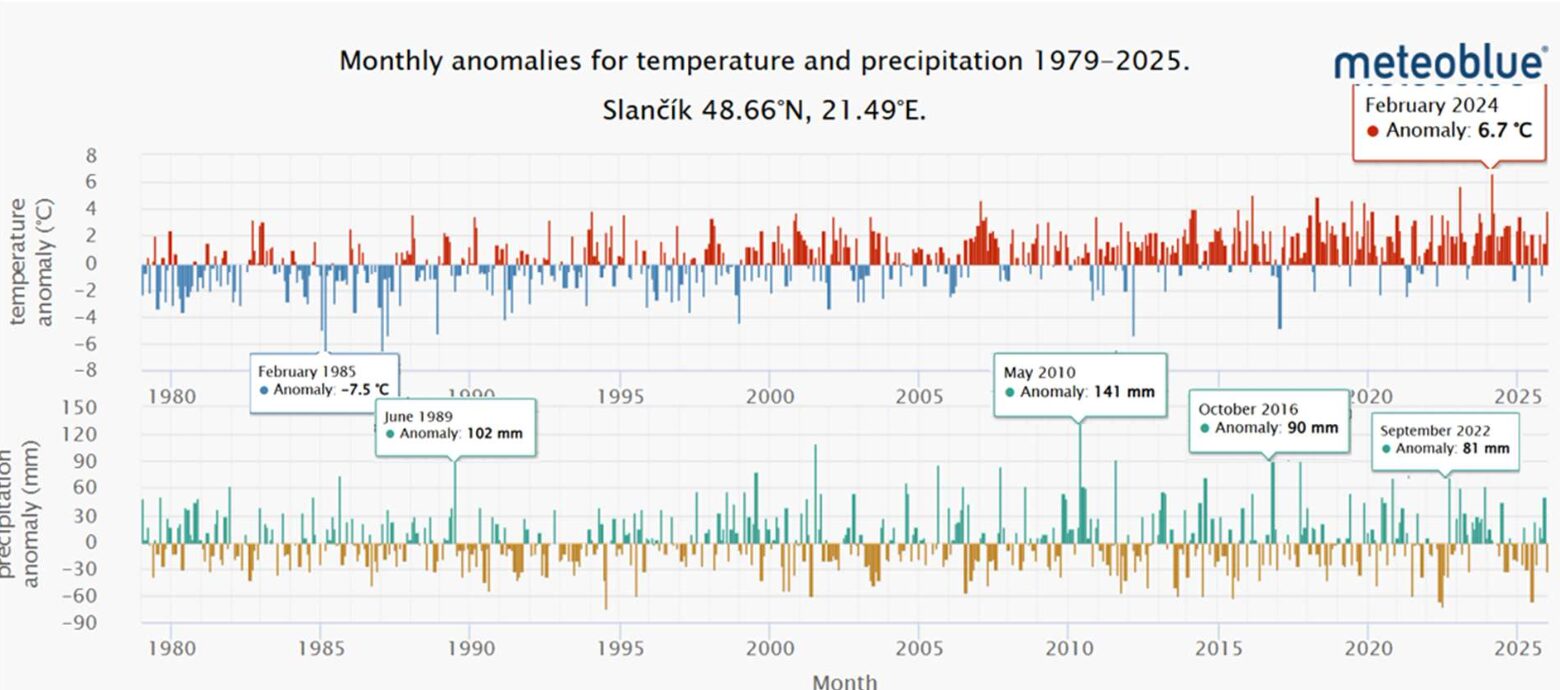
The Roňava river basin, covering an area of 212 km2 on the Slovak side, faces several long-standing serious environmental, climatic and, as a result, socio-economic problems. The more frequent occurrence of anomalous weather events in historical records confirms that, since 1980, there has been a trend of rising temperatures, with warm winters and hot summers marked by infrequent storm rains of low intensity, interrupted by episodes of intense rainfall.
There are 16 municipalities scattered across the Roňava river basin, covering an area of 192.82 km2 with the remaining 9% of the basin area belonging to neighbouring cadastral areas, also dominated by agricultural land. The analyses we prepared in this area were based on the needs of individual administrative units, enabling public institutions to use the acquired knowledge in their decision-making during spatial planning.
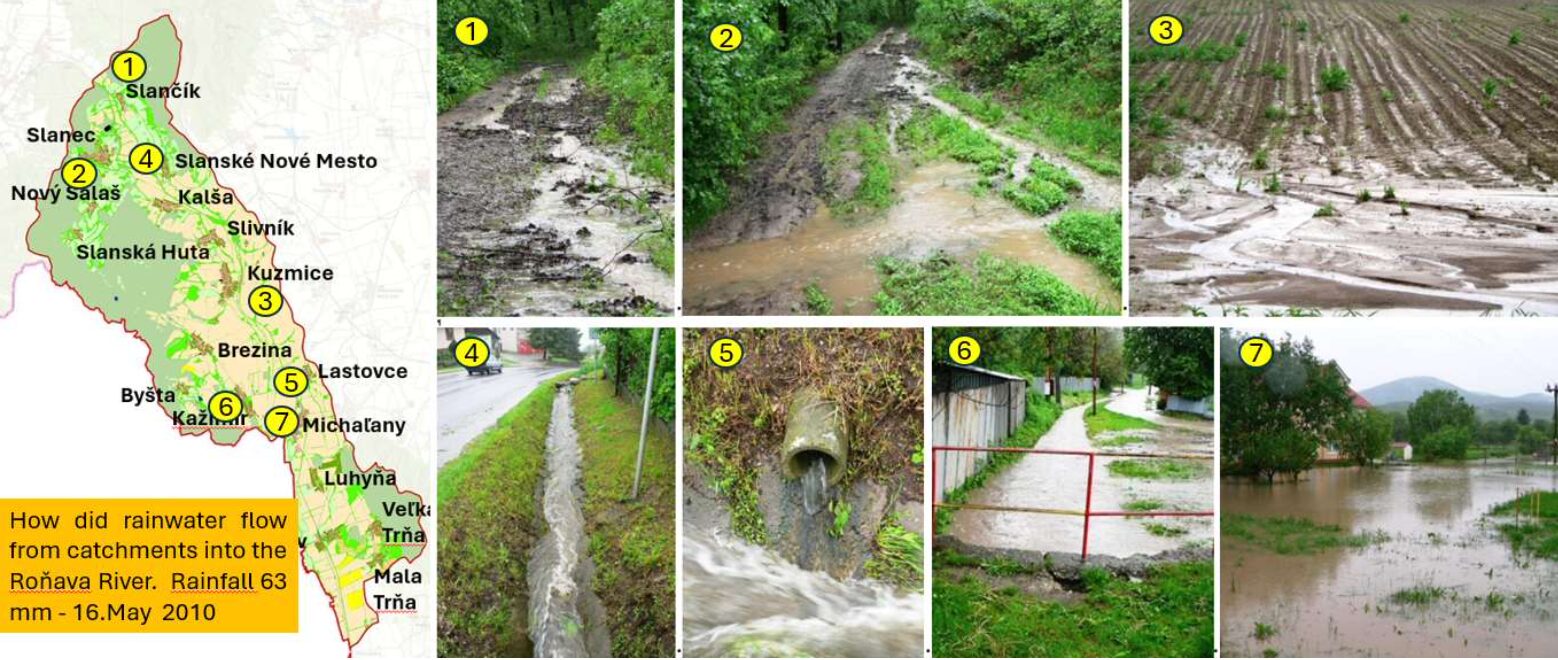
The current use of forest-agricultural and urbanized land increases the risk of frequent flooding. Rainwater runoff through forest transport infrastructure, the management of industrialized agricultural land, supported by the drainage ditches and canalization of all roofed and paved areas, has caused very rapid rainwater runoff into the river system with very frequent flooding.
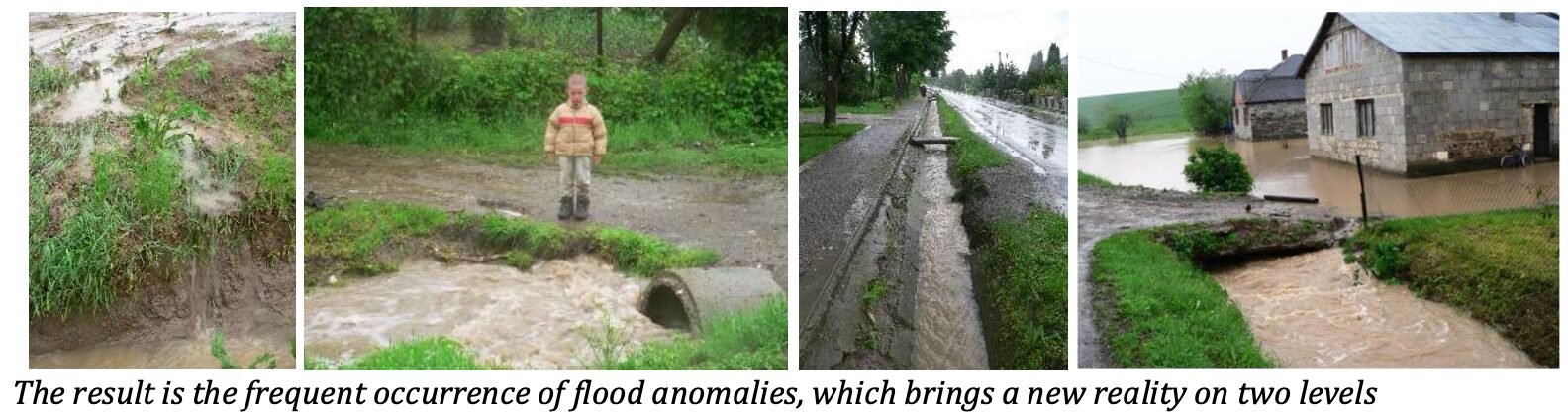
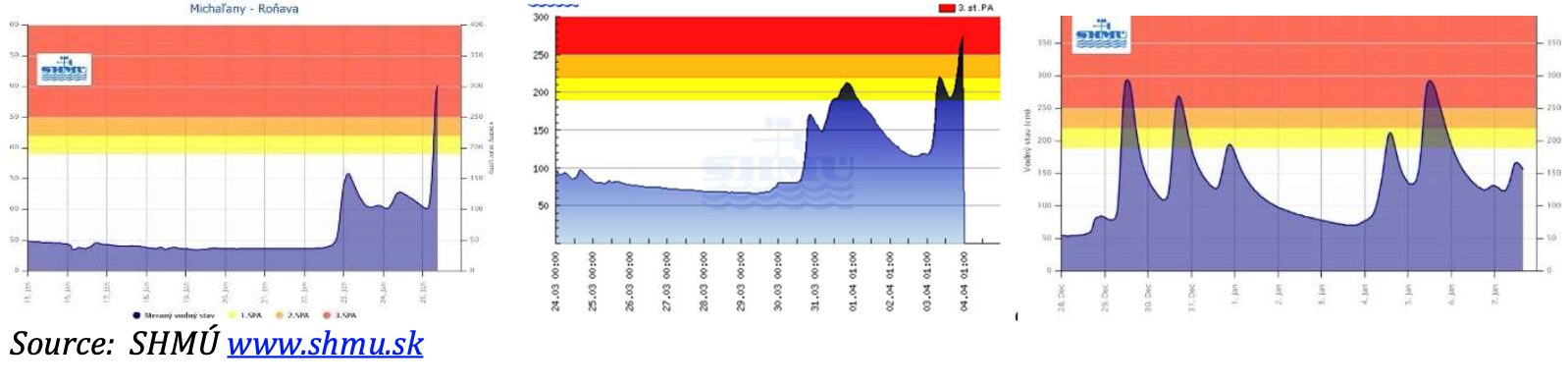
Frequent flood threats are alternated with drought. The main cause of this unfavourable situation is the rapid runoff of water from drainage areas. The water then quickly accumulates in the river system, causing flooding and, at the same time, preventing the necessary infiltration of this rainwater into the soil.
There are 16 communities in the Roňava river basin, where we mapped the landscape structure and the extent of its degradation. The results are shown in the following figure, along with the location of the municipalities. The basin is dominated by intensively cultivated agricultural land (35%), which, together with permanent grassland, accounts for more than 50% of the basin’s total area. Forest ecosystems make up almost 20% of the landscape structure of the river basin, which is approximately half the percentage of forests in the whole of Slovakia.
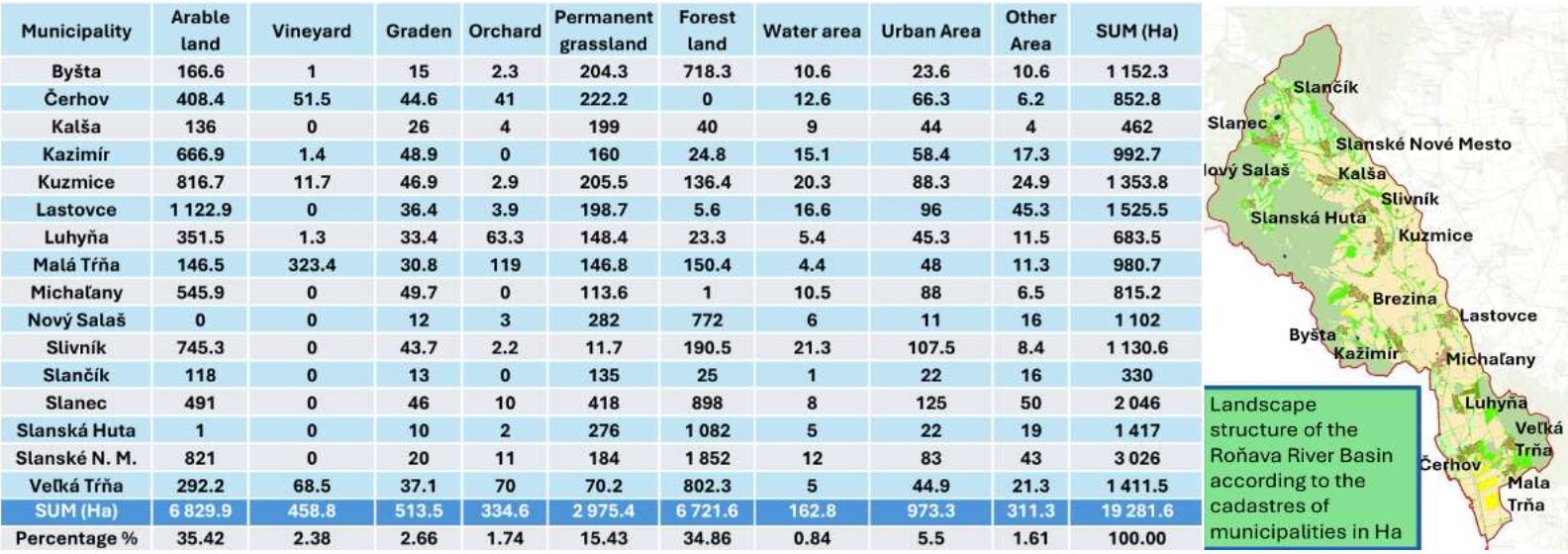
The lower part of the river basin has favourable conditions for growing fruit and grapes. There are more than 450 hectares of vineyards and almost 850 hectares of orchards and gardens. The drying of the landscape is also influenced by reduced infiltration of rainwater into the soil profile, which also contributes to an increase in temperature. The increased temperature causes an increase in potential evaporation from the landscape. As evaporation increases, we observe that, according to SHMÚ sources, groundwater levels have declined in all monitored locations.
The long-term trend of rising temperatures is significant both in the mountainous forested part of the river basin and in the lowland part. In more forested areas, average annual temperatures have risen (in Slanec) by +2.7 °C. In more open agricultural landscapes, average temperatures have risen by 2.9 °C.
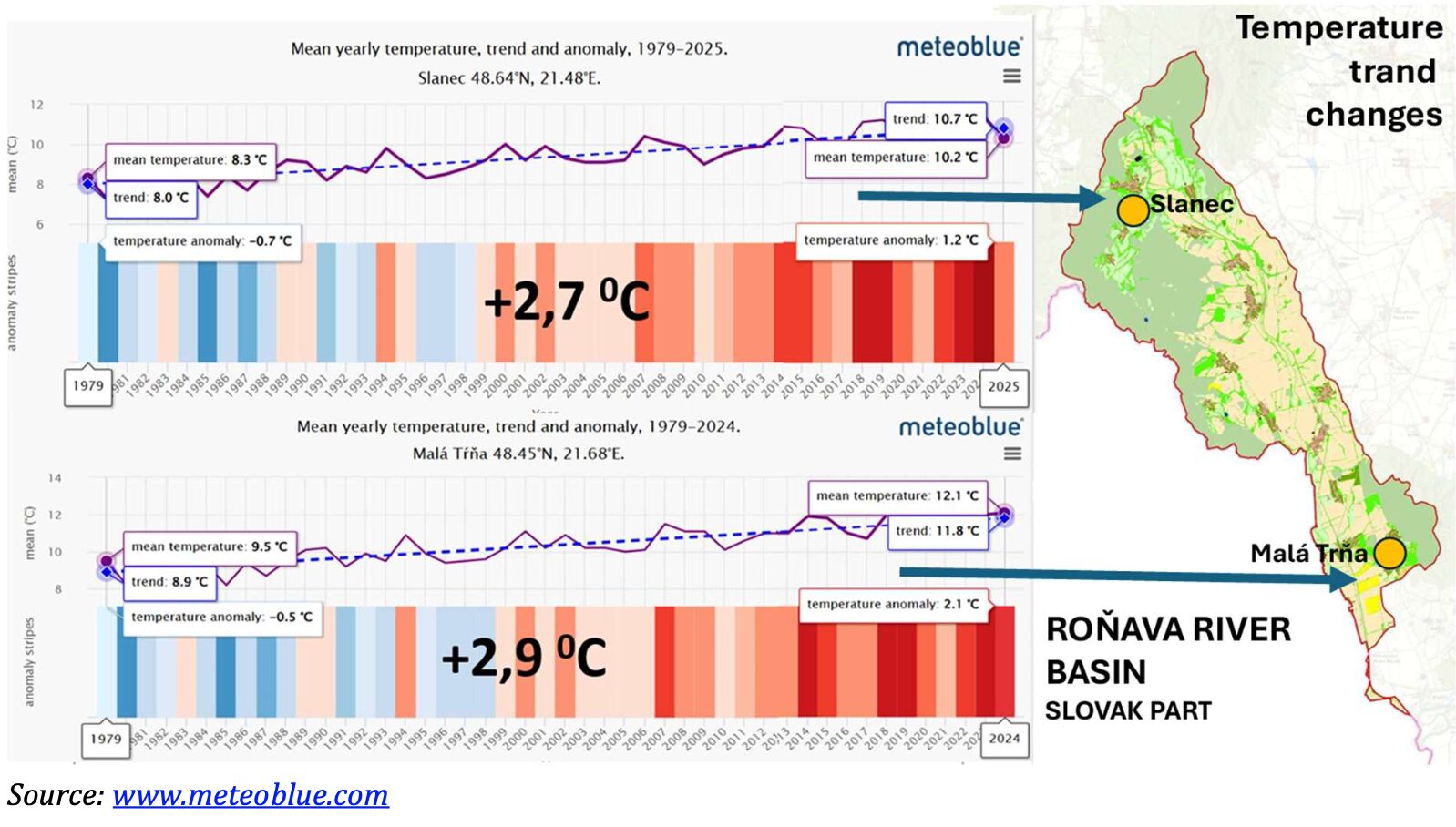
This suggests that the decline in groundwater levels in the lower part of the river basin is probably even greater, as historically, the temperature increases are higher in agricultural and urbanized areas (see comparison of Slanec and Malá Tŕňa).
It is also very important to understand temperature anomalies throughout the year in order to recognise their relations with the agricultural industry, which is dominant here. Cultivated crops are sensitive to the temperature regime of the landscape, and in order for them to withstand dramatic weather changes (such as frequent spring frosts), it is necessary to strengthen the landscape’s resilience against drying. Longer periods without frost in winter affect the early onset of vegetation, which is then threatened by subsequent spring frosts. See the development of temperature anomalies, especially in winter and with the onset of spring, in the lower part of the river basin in the following diagram.
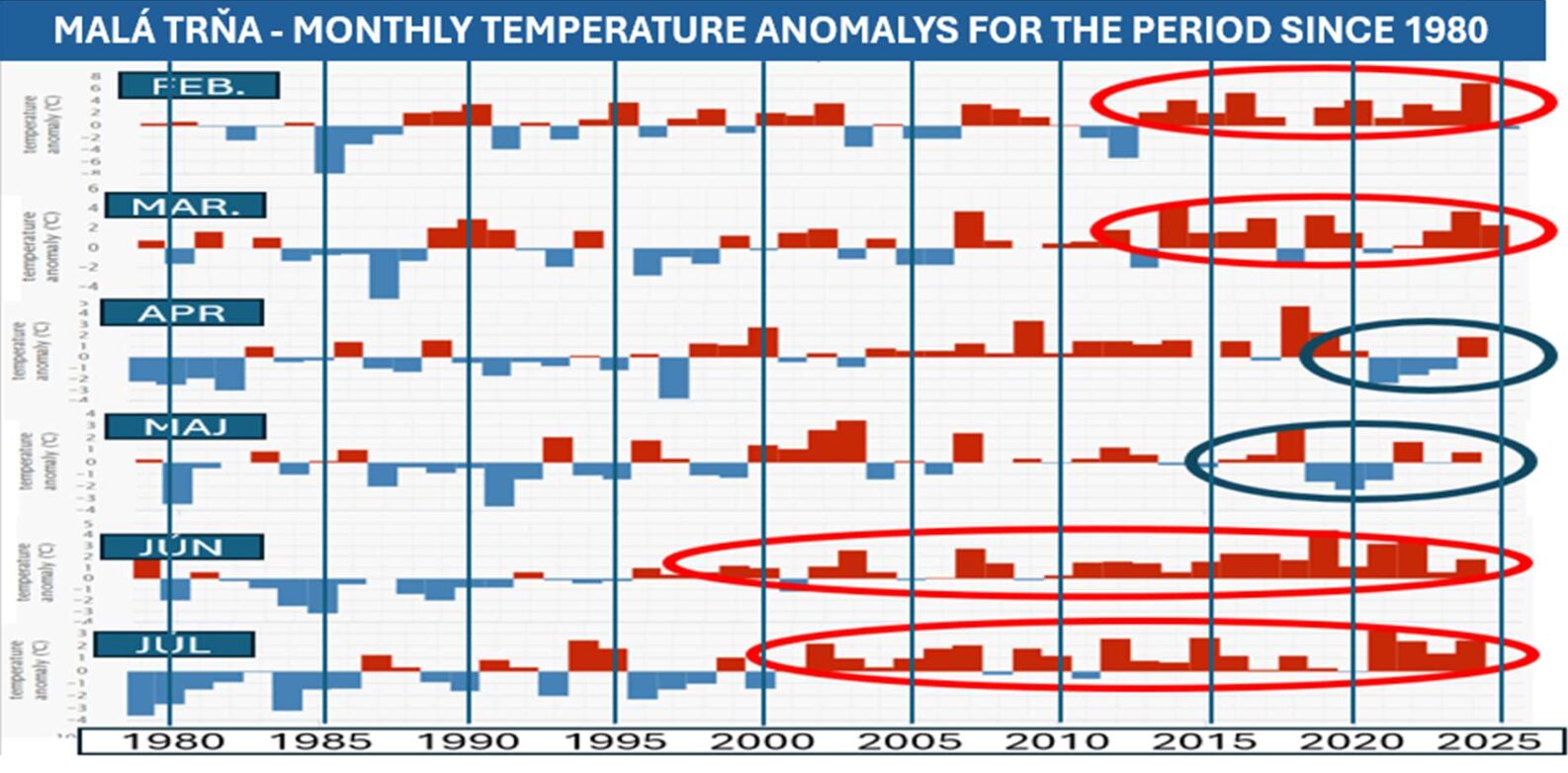
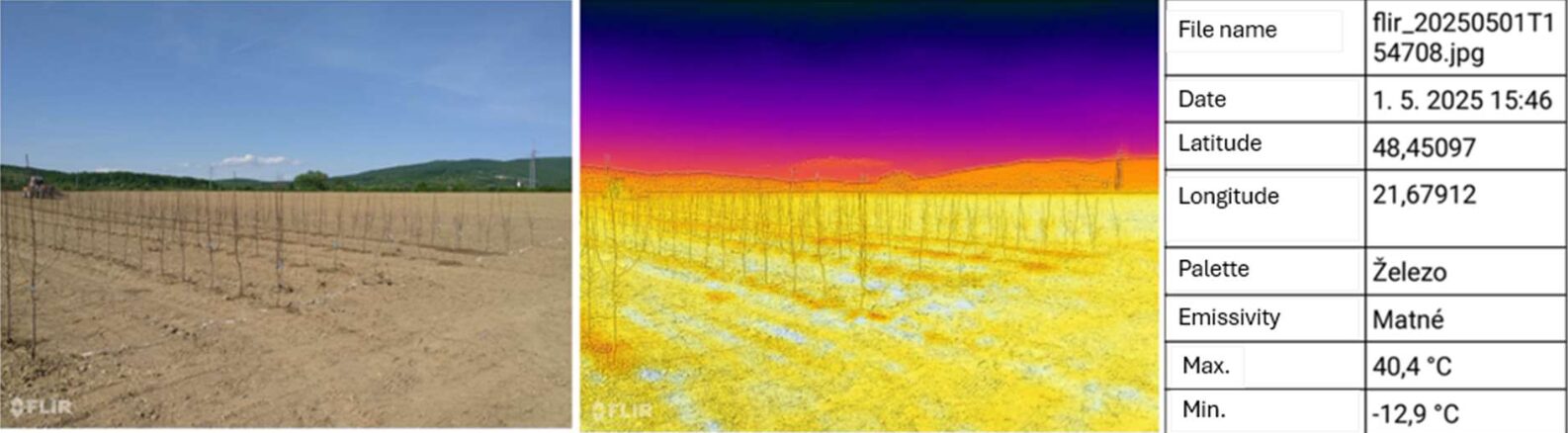
These negative phenomena are also caused by the drying and overheating of the landscape, with the subsequent frequent occurrence of late-night frosts in the area, which causes significant damage to fruit growing in the region. Strategically, these risks can be prevented if more water remains in the landscape structures to slow down the processes of cooling and heating of the landscape. Framework analyses indicate that it is necessary to strengthen water retention based on the ecosystem principles in any form of farming and land use. In agricultural land, it is essential to implement Nature-based Solutions (NbS) that will act as air conditioning units in the landscape. This fact is also confirmed by the thermal images shown, which show that on 1 May, the temperature of the dry earth surface already exceeds 40 °C.
In agricultural landscapes, it is necessary to support soil water reserves across the board. The priority is to enhance the replenishment of water resources in landscape structures, with permanent availability of sufficient water to sustain the growth of vegetation of any kind. We need to air-condition/cool the landscape environment by evaporating water from vegetation.
Each cubic meter (1,000 litres) of rainwater that remains in the landscape contributes approximately 300 litres to the replenishment of groundwater reserves. The remaining 700 litres of water evaporates and solar energy is consumed for its evaporation, which removes approximately 500 kWh of heat from the environment. This improves conditions for vegetation growth and contributes to increasing the landscape’s resilience to climate change. Water evaporated from the landscape returns to the small water cycle and can form dew, which is much-needed and useful free water that contributes to vegetation growth. Areas where more rainwater is captured can increase horizontal precipitation (dew) by more than 50 litres per square meter of soil.
Economic use of the landscape in the recent past (1970-1990) promoted widespread drainage and subsequent drying of the landscape. This contributed to faster drying of agricultural land and subsequent overheating of the surrounding environment, and thus to a decrease in precipitation. As mentioned above, rainwater from degraded and man-made parts of the landscape drains away quickly, which also contributes to the drying of the landscape and its subsequent overheating.
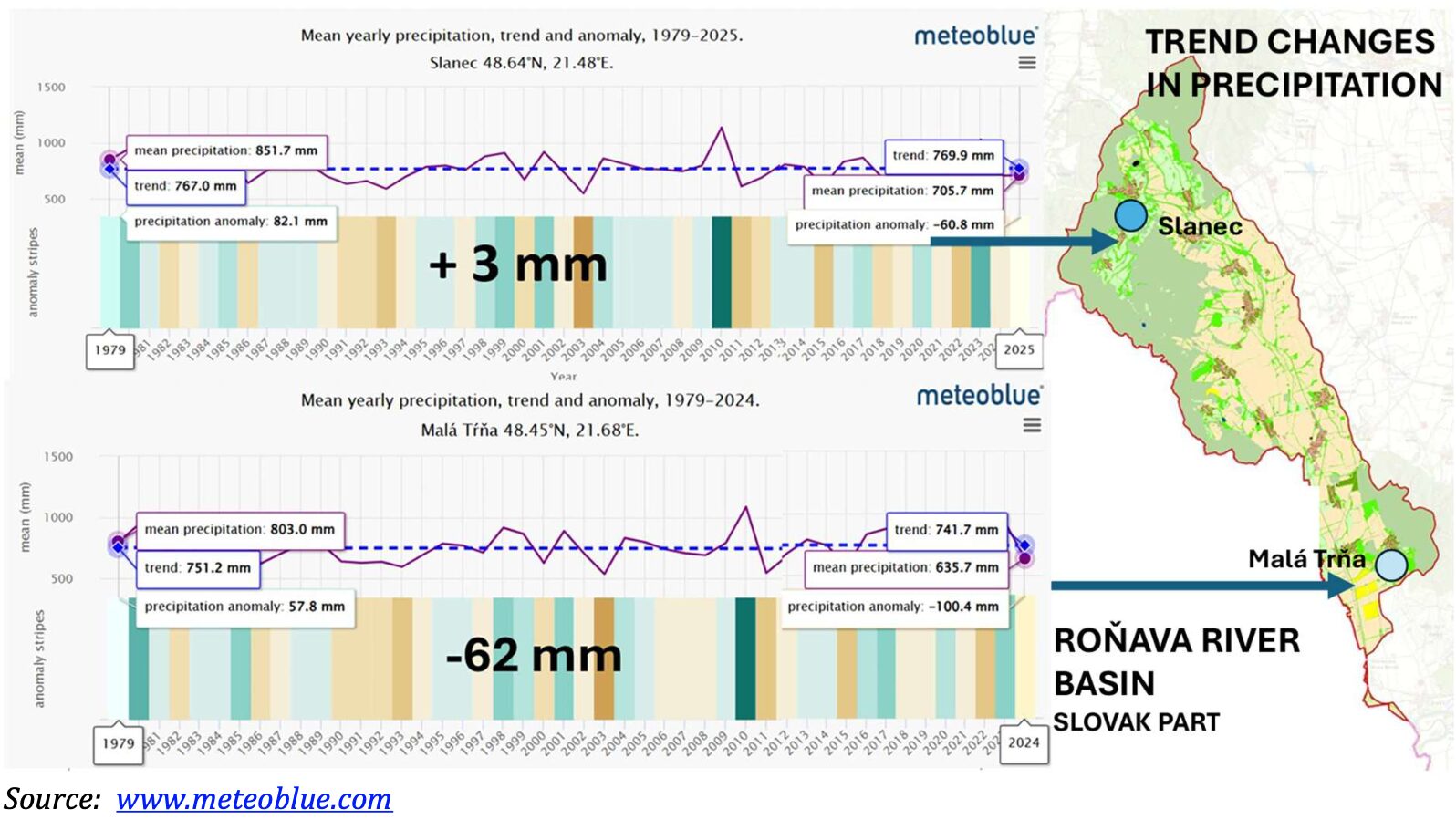
In open agricultural landscapes, there has been a significant decline in annual precipitation balances because the landscape is drier, heats up rapidly, and creates higher pressure over dry areas. Under such conditions, clouds and subsequent rainfall form less frequently over these parts of the landscape.This is confirmed by trend analyses of annual precipitation totals. In the open countryside, the decline has reached approximately 8% over the last 50 years. In even more exposed agricultural areas with intensive farming activity, the decline in annual precipitation exceeds 12%.
The following findings emerge from the presented integrated framework analysis in the Roňava river basin:
1. Less frequent rainfall alternating with intense downpours and rapid runoff from intensively used land.
2. Landscape drying, declining groundwater levels, and loss of soil fertility.
3. Overheating of the land, increased sensible heat flux into the atmosphere, and rising ambient temperatures due to insufficient moisture.
4. The Roňava river has effectively become a canal that collects rainwater and drains it into the Bodrog, Tisa, and Danube river systems, thereby losing its function as a stable water ecosystem.
If no measures are taken, the Roňava river basin faces the following future threats:
1. More frequent dry and hot summers, alternating with extremely intense rainfall
2. Increased flood damage, demographic decline
3. Threat to the remaining biodiversity
4. Higher costs for agricultural production and deterioration of the forest management. Climate change in the Roňava river basin manifests through negative effects such as reduced water availability, greater temperature extremes, alternating torrential floods and long periods of drought, and loss of soil fertility.
The most effective technology for monitoring temperature changes in the landscape is the use of thermal imaging cameras. Thermal imaging allows us to effectively identify the need for and positive impact of NbS (Nature-based Solutions) on the temperature regime of the landscape. Thermal imaging cameras are commonly used in construction. For example, when mapping heat loss from buildings.
This technology can also be used effectively to map the temperature regime of the earth’s surface/landscape/ecosystems and to quickly identify not only the current state of landscape drying, but it can also be used to design specific measures. Thermal imaging can also be used to understand the impact of changes in the temperature regime of the landscape, for example, through the implementation of NbS, helping us to understand the air conditioning effect.
In order to be able to use thermal imaging in the assessment of the climatic characteristics of ecosystems and their damage, we present three examples of conventional land use in its current state, and also three examples of the temperature ecosystem temperature regime after the implementation of Nature-based Solutions. These technologies can be effectively used to assess the real impact of implemented NbS on the temperature regime of the landscape and also to quantify the climatic characteristics.
We selected three characteristic ecosystems: agricultural land sown with soybean, a forest ecosystem with trees, and an urbanized, drained landscape with grass surfaces.
In agricultural landscapes, the ground surface beneath the crops is dry, so the temperature often exceeds 40 °C. The temperature of the leaves is 10 degrees lower. This temperature difference indicates that the ecosystem does not have enough water for evaporation and that the plants suffer from a lack of moisture, which limits their growth. We also chose this thermal image to highlight the sensitivity of the recordings and the calibration of the temperature regime. If the temperature difference between the ground surface and the plants were smaller, crops would have better conditions for achieving higher yields.
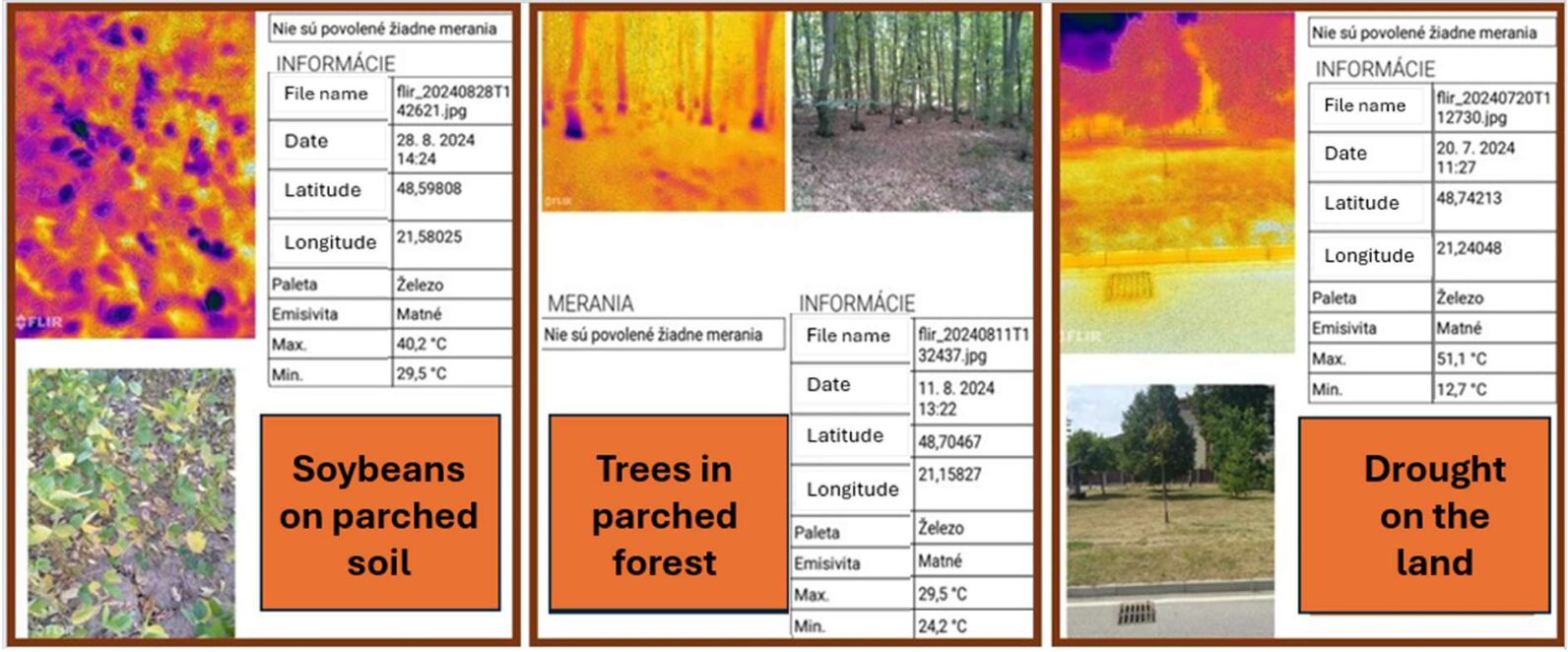
The temperature regime of forest trees clearly indicates drought, as the cooler parts of the ecosystem have tree trunks near the ground level. The upper parts of the tree trunks have a relatively high temperature, which confirms that the trees are suffering from a lack of water for their growth.
The thermal image was taken on 11 August, when the drought in Slovakia was at its peak after a previous long period without rain, which was also reflected in the dryness of the forests. Trees suffer from water deficit and therefore overheat quickly because they transpire less. This weakens photosynthesis in the forest ecosystem and has a negative impact on wood increments. It is also possible to observe a relatively high temperature difference between the lower parts of tree trunks and the tree crowns, reaching up to 5 °C. This confirms a significant moisture deficit in the soil with a negative impact on wood increments and the economic results of forest managers.
The third example of landscape temperature assessment comes from an urbanized city landscape.
Here, the temperature difference between the atmosphere and the hot road surface exceeds 35 degrees. The coolest areas within tree vegetation reach temperatures of more than 45 °C, which confirms that dry grass and trees have a weak cooling effect because they lack water and, in this state, cannot contribute sufficiently to improving the climate. Unfortunately, rainwater management in the area is solved by drainage. By changing rainwater management, by collecting it in grassy vegetation and in the root zone of trees and shrubs, the climate of the ecosystem would be improved, and the temperature could drop by up to 10 °C compared to the current situation. This example highlights the potential for using rainwater in spatial planning to increase the climate resilience of ecosystems.
The following three examples highlight the possibility of using thermal imaging to assess the impact of Nature-based Solutions (NBS). We selected three examples. A micro-pit in the terrain where rainwater is collected and seeps into the soil, a water surface in the forest, and implemented contour infiltration strips where rainwater is collected, and what impact these elements have on the thermoregulation of the landscape in both hot and cold weather.
The first image clearly shows how the rainwater collected in a micro-pit, dug by wild boars while foraging, causes cooling. The water retained and absorbed in the pit, which is about 0.3 m deep, creates a cooling effect. In the height of summer, the surface temperature of bare soil can reach up to 59 °C.
This example shows the importance of retaining every litre of rainwater to reduce surface overheating.
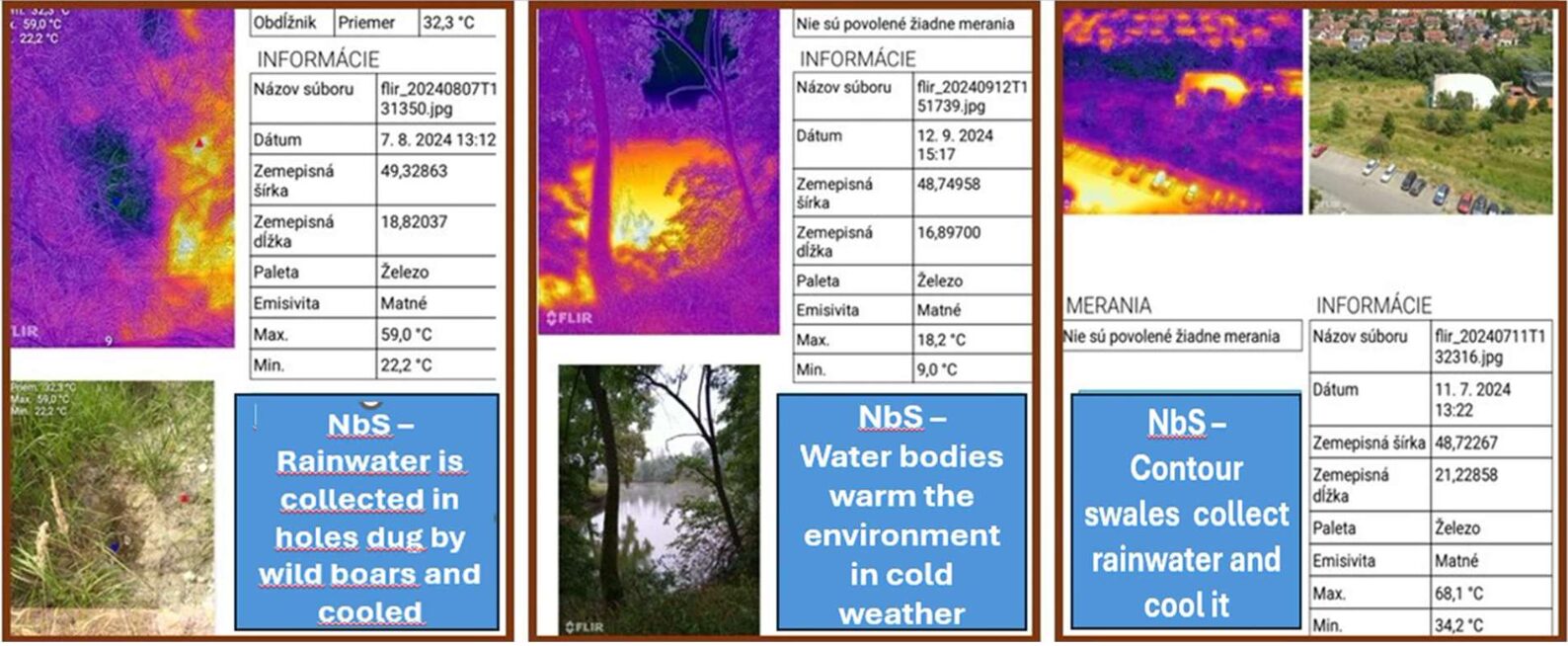
The second example is a thermal image of a small body of water taken on 12 September during cooler weather. In colder conditions, bodies of water warm the earth’s surface. This means that while the temperature in the surrounding vegetation dropped significantly to 9 °C, the body of water, which was heated during the summer, cools down more slowly in the autumn and helps balance temperature differences. This is a very important insight for landscape use proposals so that the landscape remains resilient in both hot and cold weather.
The third example of a thermal image from 11 July 2024 is from NbS implemented in a completely degraded site without vegetation. Thermal imaging shows that the restoration of degraded land through rainwater retention has regenerative effects and promotes not only the restoration of the degraded ecosystem by retaining rainwater through NbS, but also the air conditioning of the ecosystem through water evaporation from vegetation. We estimate that the temperature of the earth’s surface without vegetation at the peak of summer can exceed 60 °C. Because all rainwater at the site is collected, i.e., it does not run off the surface but evaporates after being retained on site, the temperature according to thermal imaging records reaches less than 35 °C.
The NbS implemented on a 3-hectare site reduces the temperature of the monitored surface by more than 25 degrees. Quantification of the impact of rainwater harvesting through NbS provides the much-needed knowledge of the impact of landscape structure on climate in the LAND4CLIMATE project in a specific implementation in the Roňava river basin. The timeline from the site confirms the rapid regeneration of the ecosystem when sufficient rainwater is retained in the landscape.