Is It Possible to Reduce the Extreme Weather Patterns, Such as Hurricanes?

Is It Possible to Reduce the Extreme Weather Patterns, Such as Hurricanes?

Is It Possible to Reduce the Extreme Weather Patterns, Such as Hurricanes?

East Coast of North America has been hit by the first hurricane of the season, Isaias, as I write this blog. The extreme weather event brings me back in memory lane to my visit to South Dakota, U.S., in 2012, when I visited the west coast of the Missouri River during a scorching July heatwave.  

I was a guest at the invitation of Candace Ducheneaux of the Lakota Nation. 

Candace invited me based on viewing the documentary Blue Gold: World Water Wars, directed by Sam Bozo of California. The movie referenced our project Blue Alternative in which we focused on creating water resources by revitalizing Slovakia’s landscape.  
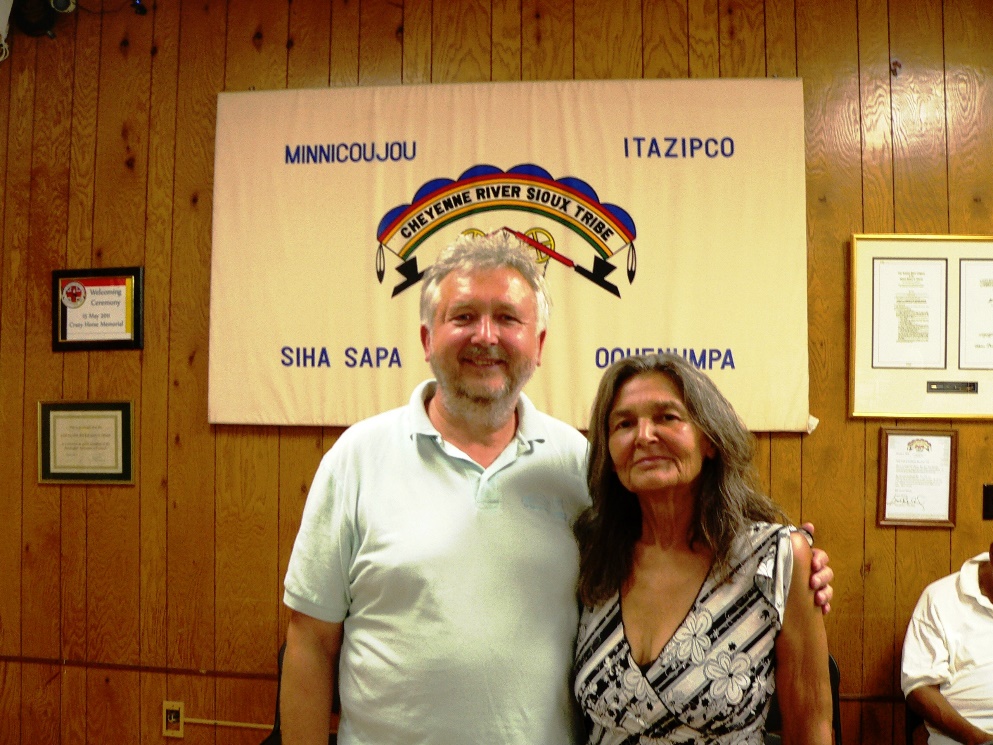
Candace wrote to me and described the issues their tribe was experiencing with their five million acres of arid landscape in South Dakota.

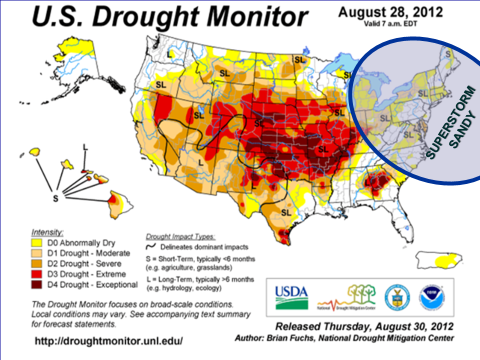
That’s how I came to learn about the context of the long-term series of droughts in the U.S. interior and realized the connection with more frequent and extreme occurrences of hurricanes on the East Coast.
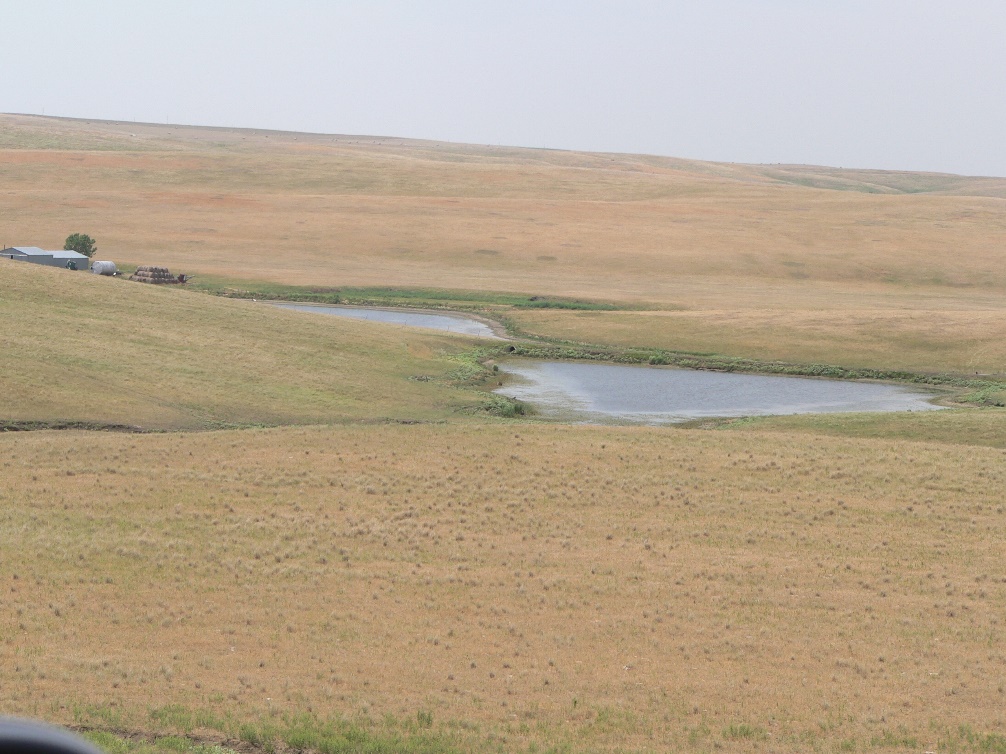
When I got off the air-conditioned car into the prairie, I was left in shock by a penetrating heat. Temperatures soared to 120 oF. The dry, piercing wind was burning. My first thought was, what am I going to do with water here when it’s so dry?
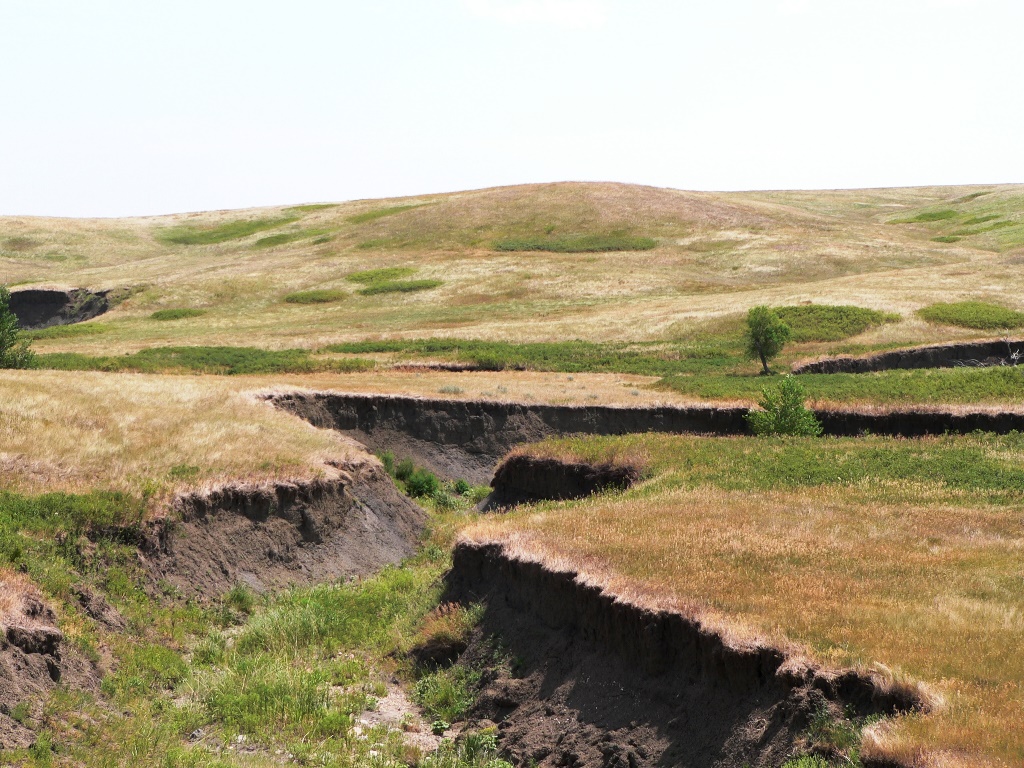
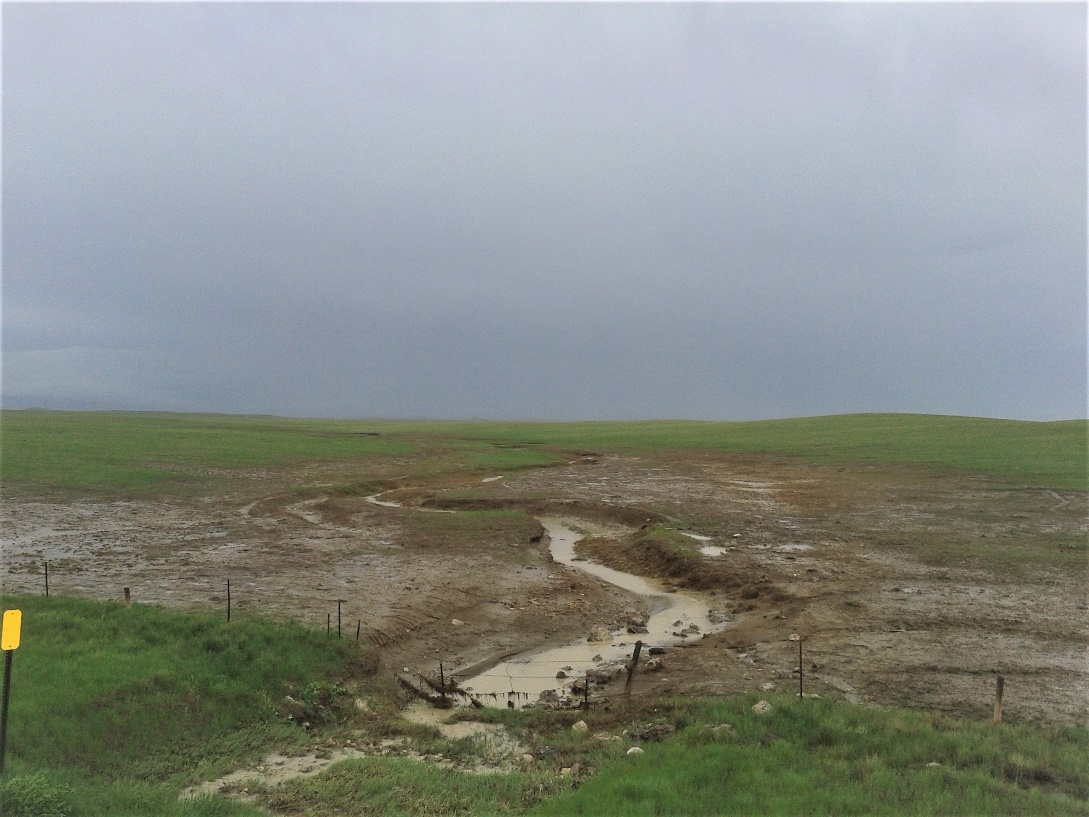
As I became more familiar with the landscape, especially water erosion damage to the land, I began to realize the reasons for long-term droughts and increased heavy precipitation bringing torrential rains and flush floods. I saw the correlation with the more frequent and more extreme hurricanes on the U.S. East Coast.
In 2012 South Dakota was hit by record droughts, resulting in historic crop losses and the formation of a vast thermal island that shapes the cloud structure and the density of water vapor concentration in the atmosphere. Arid land gave away the fact that local aquifers are depleted.
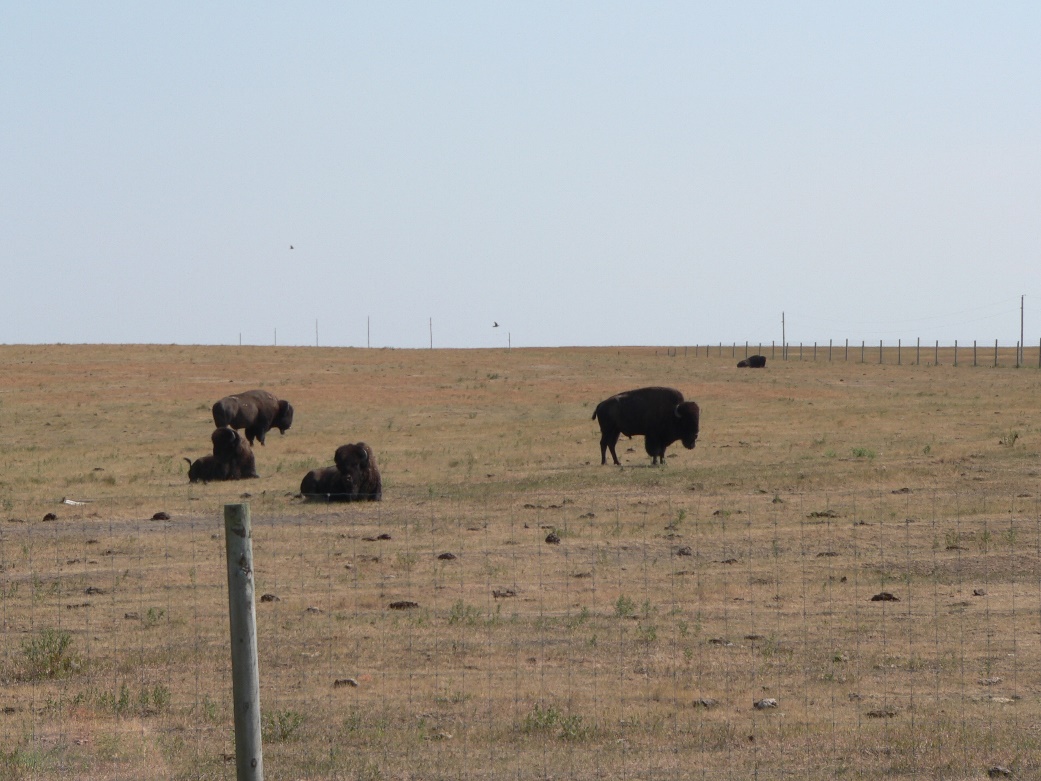
On my subsequent visit to the Great Plains in May 2013, I experienced a historic flood. Rain notwithstanding, the arid ground was unable to absorb the vast quantities of rain, which ran off into flooded creeks down the Missouri River and out to the Gulf of Mexico without ever replenishing the aquifer.

It dawned on me how to restore lush greenery and soil fertility inland and, at the same time, alleviate the extremes of hurricanes in the East.
I told Candace, “If you want to have a land lush with vegetation and grazing animals, you have to work with experts and government officials i from the East Coast.
There is a drought in your territory, and you don’t have the money.
They have the money and excess water that hurts them (during more frequent extreme weather events).

If you create a sustainable water restoration program, you will get your water back and curtail the hot temperature patterns in your region. It will rain more in your state, and it will rain less on the East Coast. Lakota nation is going to experience less drought, and at the same time, East Coast states will encounter less flooding and flood damage. In practice, this means that you can realistically restore the damaged “biotic pump” described by Russian scientists Gorskhov-Makarieva and show the world how to heal the earth. Your sustainable water program and land management projects will become the model for others.”

I was aware it was a bold idea to negotiate with the officials. This was confirmed at the Cheyenne River Sioux Tribe meeting, where Candace and I have tried to offer a sustainable water program as a solution and a model of the economic prosperity of the Lakota People.
That’s when I said to Candace, “You’ll see what will happen on the East Coast. The East Coast will be hit by very dangerous hurricanes because their strength depends on the overheating of the inland, the interior of the U.S.

In late October 2012 , superstorm Sandy hit Atlantic Coast. Relentless rainfall and coastal surges coupled with high winds caused widespread coastal flooding.
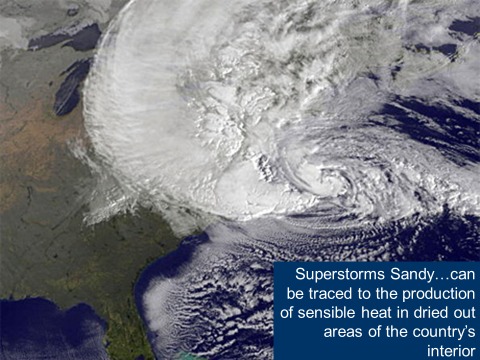
I understand that in New England, rainfall increased by an average of 20-30%.
The states of New England states have excellent ecological programs in place. However, their problem goes beyond their borders. It needs a coordinated federal decision.
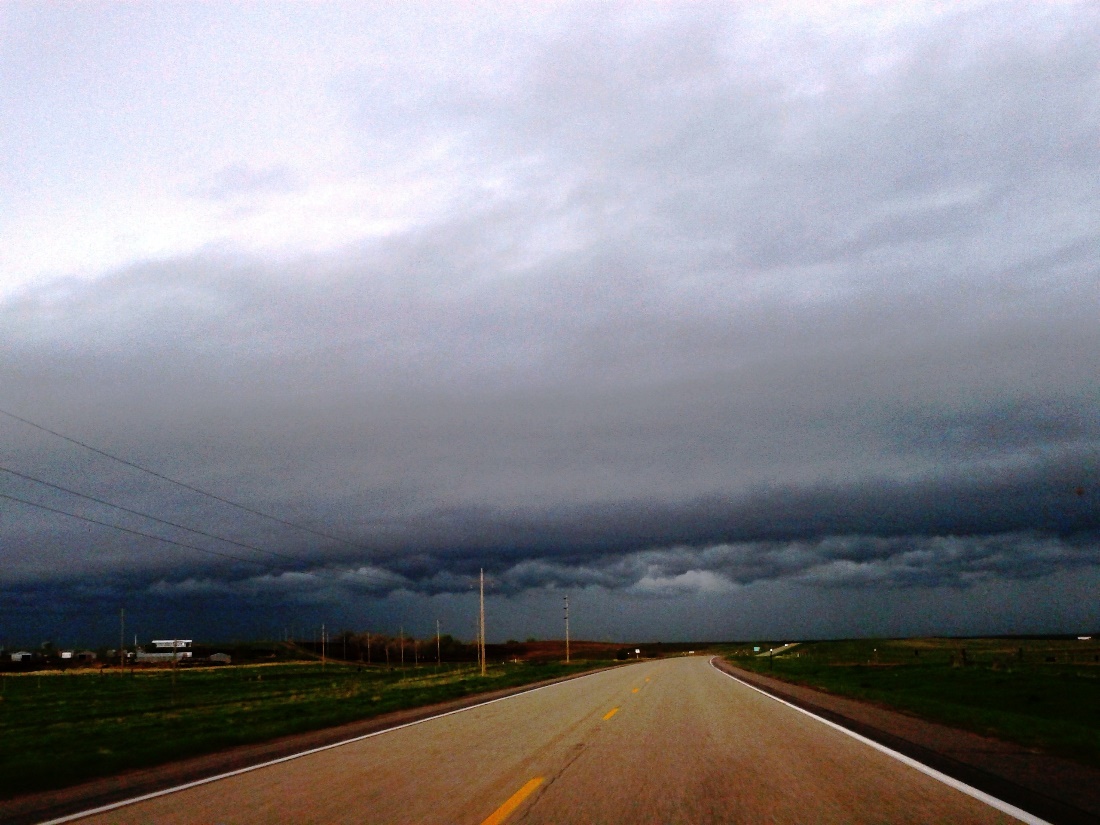
When I revisited South Dakota in May 2013, tornadoes destruction in addition to extreme precipitation and historical floods were ravaging the interior of the U.S., causing massive soil erosion and unnecessary stormwater runoff. It is clear there is a connection with cumulative groundwater depletion in the United States, pointing to the increased rate since the mid- nineteenth century.

Against this background, Jan Lambert and I began writing the Global Action Plan for the Recovery of Small Water Cycles and Climate, which was presented at the BIO4CLIMATE conference in Boston in 2015, followed by the American Action Plan, which we presented at the 2017 Lecture Tour.

Simply put, a drought in the interior US inland is a culprit behind increased frequency of hurricanes on the East Coast.
In other words, groundwater withdrawal drains water from the river basins out to the oceans, depleting aquifers, causing droughts. As a consequence, the excess water in the oceans, in addition to Anthropocene global warming exacerbate the extreme weather patterns and huricanes.

Restoration of small water cycles of interior U.S. territory will bring security and protection to this part of the country while reducing extreme weather events and increasing environmental safety.

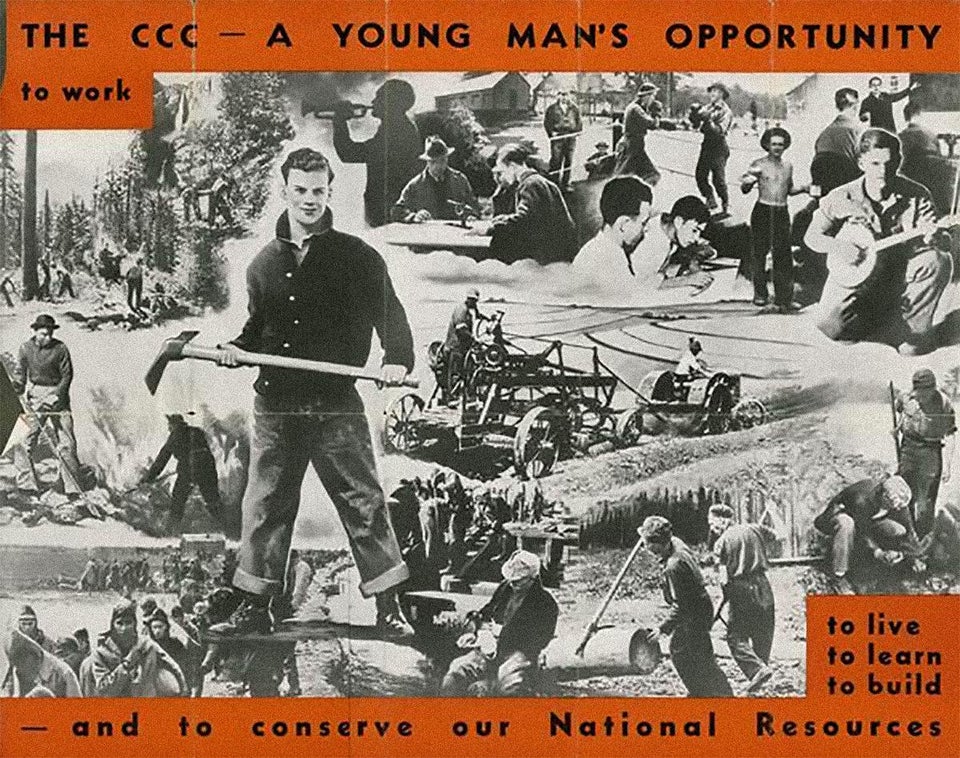
The government and people of the United States should revisit and re-apply the successful lessons learned during the Civilian Conservation Corps project after the Great Depression.

Congress approved FDR’s work relief program in 1933 as a part of the New Deal. The stimulus package of ten million USD provided work for three million unemployed young men aged 18-25, who revitalized the country by working on environmental conservation projects. By the time the CCC program ended, the boys had planted more than 3.5 billion trees, halted soil erosion on more than 20 million acres, and developed more than 800 state parks. No matter where you live in the United States, you can see that CCC’s legacy continues today.

The value of the work completed by the CCC nationwide is estimated at $8 billion
My wish is that the countries in the world would be governed by actual politicians who are public servants, looking for common-sense solutions instead of rigid officials hiding behind the existing laws. If we do not act soon, people might find themself about 50 years from a collapse in the planet’s water system.

Food, water, biological, and climate security can be accomplished by retaining rainwater in depleted aquifers. Water recovery will restore the land and fight the droughts.

Climate change solutions can be pretty simple and straightforward, hiding in a plane view. Let us observe the small hydrological cycles. It does not have to be a complicated “smart” resolution. It can be a pretty simple answer.

It turns out that some of the human-caused destructive processes in nature have already grown out of control. We are not able to connect the link between A and B.
Let us learn to apply the solutions that are simple, logical, and manageable within a framework of a short decade, not a long century.

As for Candace? She spearheaded Mni (“Water”) conservation program to restore the hydrological cycles in the Cheyenne River Reservation.

Copyright: ©2020 Michal Kravčík
Photo Credit: Michal Krav
čík, Wisconsin Historical Society, NASA.  Translation: Zuzana Mulkerin


New Water Paradigm – Is Cooling of the Hot World Possible?

New Water Paradigm – Is Cooling of the Hot World Possible?

Water is at the heart of both cause and effect of climate change


Is there a way to constrain climate change sensitivity? The debate over the cause of climate change has been ongoing over the last few decades.

Climate scientists evaluate the human-made cause of global warming. Burning fossil fuels and deforestation release the stored carbon into the atmosphere and heat our planet. As a consequence, global sea levels are rising. 

However, what if there was another way to look at the cause of rising ocean levels? What if such an explanation has been hiding in plain sight? 

The primary focus on carbon dioxide (CO2) rising levels underscores the denial of climate change skeptics. Why is it so? What is the reason? Well, make an informed decision.

The current scientific climate models presume that the volume of water in the atmosphere is given and not interchangeable. Water is a renewable source that circulates in the form of evaporation “between sky and Earth”.

To evaporate 1 cubic meter of water

milion cubic meters of GLOBAL STORM RUNOFF drained by people annually INTO THE OCEANS

TERAWATT HOURS OF HEAT CAN BE SENT by water vapor into the colder layers of atmosphere

To put it simply, the rising levels of CO2 in the atmosphere warm up the Earth’s surface. There must be a clear and unchangeable correlation between our planet’s temperature regime and the CO2 increase.

This interpretation of the greenhouse effect explains that the rising CO2 levels warm up the planet. The accumulated temperatures heat the atmosphere and create havoc. The atmospheric changes transform into the new extreme weather patterns, territorial and temporal changes in rainfall distribution, and the formation of atmospheric rivers.

Somehow, we forgot the crucial fact that CO2 is the cornerstone of all living organisms. Just as there will be no life without water and the Sun, there is no life possible without carbon dioxide.

Given the presumptions that CO2 levels rise in the atmosphere and the landscape water balance and sunlight remain the same, we should conclude that there ought to be more photosynthesis. More photosynthesis should lead to greener continents. The opposite is undoubtedly true.

The satellite images reveal that the continents are more and more yellow, in other words, drier than before. 

COOLING EARTH WITH WATER VAPOR.

Satellite picture – Arid landscape in a dehydrated river basin, Spain, South of Madrid (Google maps, 2020)

Sensible heat.


It seems there is a betrayal somewhere that we need to understand. Without recognizing it, we will live in error and provide only partial or ineffective solutions to mitigate climate change. 

A multiple culvert in the middle of arid landscape in South Dakota (July 2012)


Is carbon dioxide the only primary culprit in climate change mitigation? Let us look at it from another angle so that we do not see only what we want to see. We need a fresh look at the thermal regime of the planet Earth.

There is one crucial connection that has escaped scientists. The state of water in the atmosphere changes depending on how we humans manage our land. 

If we drain the landscape, we weaken its natural air conditioning system, which stops working because there is less water in the local watershed. If water is not retained in the ecosystem, the natural cooling system cannot regulate the heat. 

Surface runoff from agricultural land in South Dakota after heavy rains (May2013)


 Here is a comparable example. Picture the car radiator. The radiator converts the heat from the fluid inside to the air outside, thereby cooling the fluid. The reduced temperature fluid cools the engine in turn. Suppose the radiator gets punctured. The damage will cause the water leak, and the car engine gets overheated and loses its function.


Damaged cars in South Dakota (2013)

What is the solution?

Water is present not only in the car radiator but also in the small water cycles. Water in the small water cycles draws the heat away from the Earth’s surface, and this heat (latent heat) is released at the dew point after the condensation of water vapor and heats the colder layers of the atmosphere. This thermal energy exchange is an example of the Law of energy conservation and the Second thermodynamic theorem at work. This author would like to remind the fact that every cubic meter of evaporated water transports 700 kWh of heat.


Latent heat.

small water cycles evaporation can lower global temperature by (at least) 3 degrees of celsius


Suppose we drain the cubic meter of rainwater as inconvenient stormwater instead of leaving it in the ecosystem, giving it a chance to evaporate locally. Stormwater eventually makes its way into the sea, yet 700 kWh of its heat per cubic meter remains in the troposphere and contributes to its overheating. (We call this the sensible heat).


We know from the physical nature of the Earth’s energy flows that once the Sun rays reach the Earth’s surface, they transform into either the latent heat provided there is a sufficient amount of water, or the sensible heat should the ecosystem lacks water. Carbon dioxide is not relevant to this physical principle of energy flows.


What are we humans doing with water on the Earth’s surface? Well, terrible things. 


Wetlands reduction, corrupt agricultural practices, and negligent stormwater management reduce the watershed and cause the landscape to dry up.


We consider the rainwater to be an inconvenient waste and dispose of it anytime the rain falls on the ground.

Rainwater runoff from the urbane zone (Košice, Slovakia, 2020)


Municipalities drain stormwater away in an attempt to keep the urban areas dry. What are the cause and the outcome of such practice? Eventually, they have to deal with the heat waves in their cities due to diminished watershed. It is time to consider data (please note that this article was initially published in 2001). Urban and real estate development is annually responsible for 57,000 km2 global runoffs.

Stream regulation as a flood protection tool (East Valley of the Nile, Egypt, 2016)


In the pursuit of food supplies, people cut annually about 127,000 km2 of forests and convert them into arable land. Corrupt agricultural practices cause an annual drying up of over 200,000 km2 of farming land. 

Damaged Forest in LOW Tatras National Park, (Slovakia, 2019)


To illustrate the point, this author analyzed the hydrological regime changes in Slovakia and appraised the rain runoff in Slovakia, amounting to 250 million cubic meters.

An enormous amount of water once abundant in the small water cycles in that region now drains away in sewage infrastructure. For comparison, Slovakia is a country in Central Europe with an area of 50,000 km2 (19,305 square miles, approximately the combined size of Vermont and New Hampshire).

Dried up dam (Big Domaša, Slovakia 2018)


Based on this research, we can determine that people worldwide drain away 760 cubic kilometers of rainwater from the continents annually. We are talking about 760,000,000,000 m3.

Stormwater runoff makes its way ultimately to the sea. This vast amount of water was previously circulating in the regional ecosystems, where small water cycles used to recycle it: water seeped into the soil, promoted photosynthesis, bound carbon to biomass and soil, evaporated, formed clouds, and subsequently formed rain in that region.

That’s a lot of water! Let that sink in. Excuse the pun.

A direct impact of the sewerage of 760 km3 of rainwater into the oceans will increase the ocean levels by 2.1 millimeters. The annual draining of 760 km3 of water into the oceans means that every decade the 2.1 cm rise in ocean levels is due to runoff, and in 50 years, it will be more than 10 cm. Without any consideration, people are mindlessly getting rid of water from the continents and creating a water shortage, food crisis as well as the climate change crisis. Please read the full science behind this article in the New Water Paradigm -Water For The Recovery of Climate, initially published in 2007 (www.waterparadigm.org).


Climate change models need to include a global rainwater runoff volume reduction in their assumptions. Why? The annual incremental increase in heat due to draining the continent river basins via sewage systems exceeds 500 thousand TWh. The existing climate scenarios do not include such calculations.

To provide an analogy, the Slovak Republic’s power plants supply its five million citizens with 22 TWh annually. It is time for climate scientists and climate activists to augment their observations and update the climate models. 


IPCC report states, for example, that global warming of 2°C would lead to an expansion of areas with significant increases in runoff and those affected by flood hazards. True. What if we looked at it from another point of view: What if the existing runoffs contribute to global warming all along?

Integrated river basin management practices will help to restore the natural water cycles and recover the climate.


Climate skeptics admonish the climate activists for misrepresenting the cause of global warming. Why give them the reason to do nothing and bring us to ruin, while our planet keeps overheating?  

LATENT HEAT TRANSPORTED WITH WATER VAPOR


532 000 TWh of latent heat is transported at the dew point after condensation of water vapor and heats the colder layers of the atmosphere.

Let us restore the Small Water Cycles!

It is possible to cool the hot world.


Copyright: © 2020, Michal Kravčík,

Translated by: Zuzana Mulkerin, Photos by: Michal Kravčík, Dušan Lukášik

Reference information: New Water Paradigm – Water for the Recovery of the Climate, 2007, www.waterparadigm.org